Quick answer: Semrush is the broadest digital-marketing suite here; Ahrefs is strongest for backlinks and organic-search research; Similarweb for estimated traffic and channels; SpyFu for focused SEO/PPC competitor research; and Project-B for mapping direct competitors, substitutes, positioning, complaints, and implications for a new business.
What we compared
We separated observed data from estimates and evaluated index coverage, geography, historical depth, exports, recurring monitoring, usability, price, and the business decision each tool can support.
- Identify whether you need SEO, paid-search, traffic, social, or offer intelligence.
- Record data date, market, device, and estimation limits.
- Compare substitutes and manual workarounds, not only named rivals.
- Turn findings into a testable change rather than a copied feature list.
Competitor-analysis tools compared
| Product | Best for | Published pricing | Main limitation |
|---|---|---|---|
| Semrush | Broad SEO, PPC, content, and visibility research | Pro listed at $139/month; annual billing differs | Cost and breadth can exceed a small one-off study |
| Ahrefs | Backlinks, organic competitors, and content research | Starter $29; Lite $129/month on published page | Less relevant when search is not the acquisition channel |
| Similarweb | Estimated traffic, audience, and channel mix | Limited public views; paid packages vary | Small-site estimates may be sparse |
| SpyFu | Focused competitor keywords and paid-search history | Basic published around $39 monthly; annual option lower | Narrower than a full marketing suite |
| Project-B | Competitors, substitutes, customer gaps, and business implications | Grow $0; new users receive 30 days Pro | Not backlink, PPC, rank-tracking, or social-listening software |
Where each tool earns its place
Semrush: broad digital intelligence
Semrush combines keyword, domain, backlink, advertising, content, and site-audit workflows. Choose it for ongoing digital-marketing work. It cannot reveal every offline substitute or explain customer motivation without primary research.
Ahrefs: deep organic-search evidence
Ahrefs is compelling when link profiles, ranking pages, keyword gaps, and content discovery drive the decision. Its web index is not a complete market map, and usage limits deserve attention.
Similarweb: channel and traffic context
Similarweb helps compare digital reach and acquisition patterns. Treat figures as modeled estimates, especially for smaller domains, and triangulate them with first-party or public evidence.
SpyFu: accessible SEO and PPC comparison
SpyFu is useful for examining the terms competitors rank or advertise for without buying the broadest suite. Coverage and market fit should be checked for the countries that matter.
Project-B: business-model competition
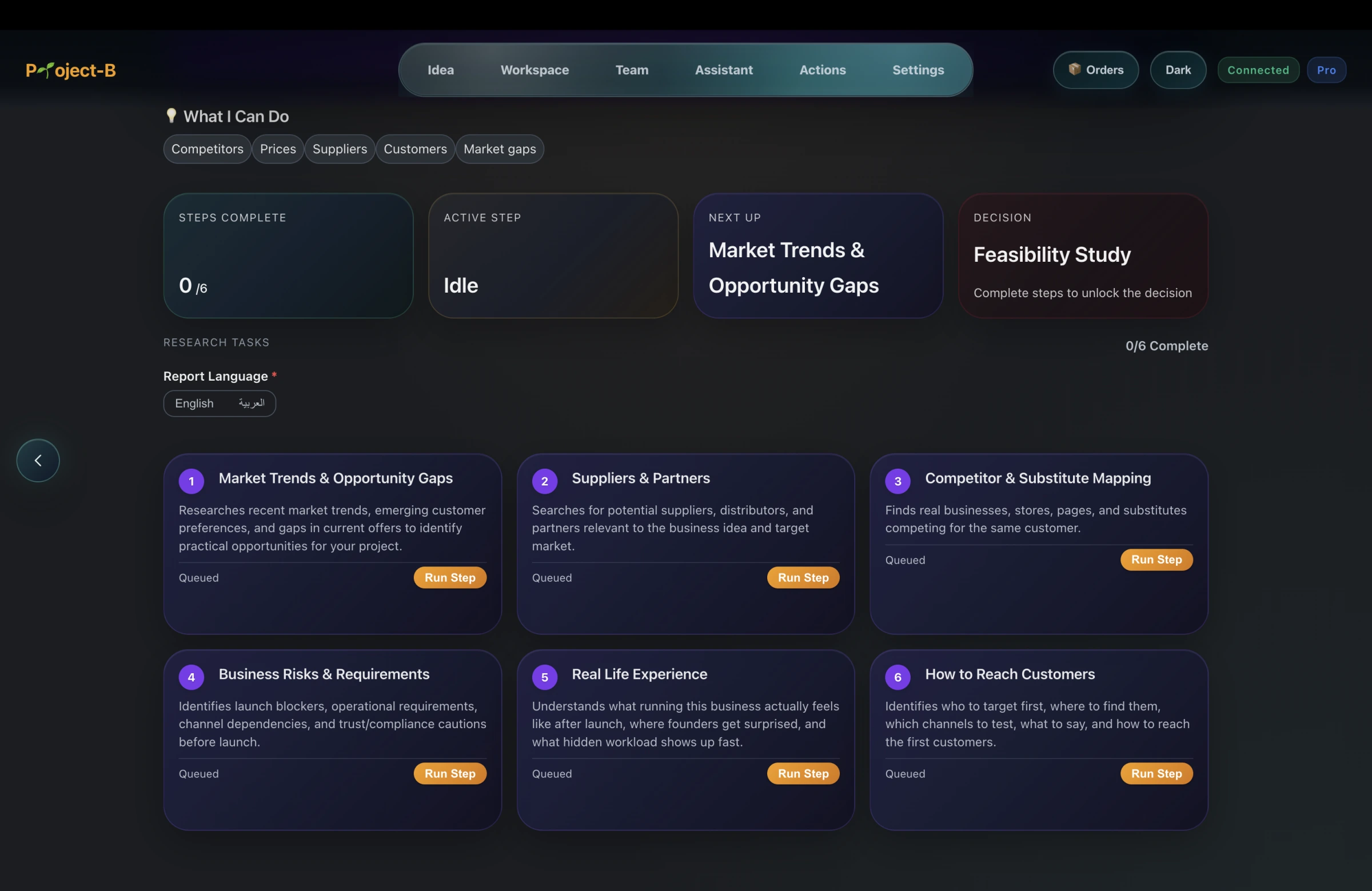
Project-B by Inciver maps competitors and substitutes inside broader research into customer pain, risks, suppliers, experience, and routes to customers. Its strength is carrying conclusions into the roadmap, site, and marketing—not replacing specialist indexes.
Choose from the decision backward
If the question is “why do they outrank us?”, use SEO intelligence. If it is “where does their traffic come from?”, use traffic estimates. If it is “why would a customer switch?”, combine offer mapping, reviews, interviews, and a small test. A monthly monitor is worthwhile only when someone owns the response.
Use the companion guide to analyze competitors before starting and connect the result to a clear value proposition.
Where Project-B fits
Project-B — Inciver’s Business Creation Platform is intentionally not ranked first for SEO, PPC, backlinks, traffic estimates, or enterprise monitoring. It is relevant when competitive evidence must shape a new business and remain connected to execution.
Official sources checked
Semrush, Ahrefs, Similarweb, and SpyFu official pricing pages.