Quick answer: HubSpot Sales Hub fits CRM-centered SMB automation; Apollo combines prospect data and engagement; Pipedrive automates activity-led pipelines; Close combines CRM, email, SMS, and calling for compact teams; lemlist focuses multichannel outbound personalization. Outreach and Salesloft belong on the shortlist when enterprise sales-engagement governance justifies their cost and administration.
What are you actually buying?
Sales automation reduces repetitive work across prospecting, outreach, follow-up, routing, activity capture, and pipeline updates. CRM remains the customer record; lead capture brings prospects in; marketing automation nurtures audiences. Sales engagement tools coordinate seller actions, and careless volume can create deliverability, consent, reputation, and platform-policy risks.
This guide is for an owner or operator with a measurable workflow problem who is comparing a subscription, managed service, or business system—not collecting tool names. Write down the current process, team size, transaction volume, required countries, and desired outcome before taking a demo. If the problem cannot be described in one sentence, a larger platform will not resolve the ambiguity.
How this category was evaluated
We compared prospect data, enrichment, sequences, personalization, email and calling, task automation, routing, CRM sync, pipeline rules, analytics, coaching, permissions, consent and suppression controls, deliverability administration, usage limits, onboarding, and per-seat/contact/credit pricing.
The shortlist began with the current commercial search results and was checked against official product and pricing material on 2026-09-13. We do not claim unperformed hands-on testing and do not manufacture numerical scores. Prices vary by country, tax, currency, contract, annual billing, and usage, so the guide records the published model and asks buyers to confirm the final quote.
Side-by-side comparison
| Product or service | Best for | Published pricing model | Main limitation |
|---|---|---|---|
| HubSpot Sales Hub | SMBs wanting sales automation inside a connected CRM | Free entry and published per-seat tiers; advanced automation costs more | Large packaging jumps and contact/hub complexity can raise total cost |
| Apollo | Teams combining B2B prospect data with outbound engagement | Published per-user plans with credit and usage limits | Data accuracy, credits, deliverability, and lawful outreach need active management |
| Pipedrive | Small sales teams automating a clear activity-led pipeline | Published per-user plans | Prospecting data and sophisticated engagement are add-on or external needs |
| Close | Compact remote sales teams wanting CRM, email, SMS, and calling together | Published per-seat plans with communication usage | Not built for every complex enterprise territory and governance model |
| lemlist | Outbound teams prioritizing personalized multichannel sequences | Published per-seat plans and limits | Channel automation and deliverability require disciplined, policy-compliant operation |
Where each option fits—and where it does not
HubSpot Sales Hub: SMBs wanting sales automation inside a connected CRM
Why it made the shortlist: CRM, email, sequences, tasks, meetings, pipeline automation, calling, reporting, and ecosystem. It is best considered for smbs wanting sales automation inside a connected crm, with free entry and published per-seat tiers; advanced automation costs more as the published or stated pricing model. Confirm the regional plan, billing period, included usage, and required add-ons at the point of purchase.
The trade-off: Large packaging jumps and contact/hub complexity can raise total cost. Avoid buying advanced hubs before proving the sales process. Before committing, run the real workflow, export a representative data set, test a non-admin role, and trigger a failure or support case. A familiar brand or longer feature list is not evidence that the operating fit is better.
Apollo: Teams combining B2B prospect data with outbound engagement
Why it made the shortlist: Prospecting database, enrichment, lists, sequences, dialer options, analytics, and CRM integrations. It is best considered for teams combining b2b prospect data with outbound engagement, with published per-user plans with credit and usage limits as the published or stated pricing model. Confirm the regional plan, billing period, included usage, and required add-ons at the point of purchase.
The trade-off: Data accuracy, credits, deliverability, and lawful outreach need active management. Avoid if your market is not represented well or consent rules prohibit the approach. Before committing, run the real workflow, export a representative data set, test a non-admin role, and trigger a failure or support case. A familiar brand or longer feature list is not evidence that the operating fit is better.
Pipedrive: Small sales teams automating a clear activity-led pipeline
Why it made the shortlist: Visual pipelines, activities, email sync, automations, lead add-ons, reports, and integrations. It is best considered for small sales teams automating a clear activity-led pipeline, with published per-user plans as the published or stated pricing model. Confirm the regional plan, billing period, included usage, and required add-ons at the point of purchase.
The trade-off: Prospecting data and sophisticated engagement are add-on or external needs. Avoid when marketing automation or enterprise engagement is the primary problem. Before committing, run the real workflow, export a representative data set, test a non-admin role, and trigger a failure or support case. A familiar brand or longer feature list is not evidence that the operating fit is better.
Close: Compact remote sales teams wanting CRM, email, SMS, and calling together
Why it made the shortlist: Fast CRM, sequences, calling, SMS, email, workflows, and pipeline reporting. It is best considered for compact remote sales teams wanting crm, email, sms, and calling together, with published per-seat plans with communication usage as the published or stated pricing model. Confirm the regional plan, billing period, included usage, and required add-ons at the point of purchase.
The trade-off: Not built for every complex enterprise territory and governance model. Avoid if deep marketing, service, or custom enterprise processes dominate. Before committing, run the real workflow, export a representative data set, test a non-admin role, and trigger a failure or support case. A familiar brand or longer feature list is not evidence that the operating fit is better.
lemlist: Outbound teams prioritizing personalized multichannel sequences
Why it made the shortlist: Email personalization, sequences, LinkedIn steps, calling options, deliverability tools, and integrations. It is best considered for outbound teams prioritizing personalized multichannel sequences, with published per-seat plans and limits as the published or stated pricing model. Confirm the regional plan, billing period, included usage, and required add-ons at the point of purchase.
The trade-off: Channel automation and deliverability require disciplined, policy-compliant operation. Avoid mass outreach without a qualified audience and suppression process. Before committing, run the real workflow, export a representative data set, test a non-admin role, and trigger a failure or support case. A familiar brand or longer feature list is not evidence that the operating fit is better.
Calculate total cost, not the subscription alone
Normalize every quote into first-year and steady-state cost. Include setup, migration, consulting, training, minimum seats, usage, transaction fees, hardware, integrations, support, storage, and premium controls. Then include the internal owner who must maintain rules, data quality, permissions, and reports. A free entry plan can be excellent, but it is not free if it creates manual reconciliation, traps data, or forces a replacement six months later.
Give every vendor the same scenario: identical users, volumes, entities, countries, and integrations. Ask the seller to label what is included, what is an add-on, and what happens beyond each limit. Do not anchor a long-term decision to an introductory discount or annualized price until renewal, cancellation, and data-return terms are understood.
Test migration, controls, and failure before purchase
Build a trial or proof of concept with non-sensitive data that represents real work rather than a polished vendor demo. Test roles, approval, correction, export, integration, duplicate handling, and an error path. Request the applicable service commitment and retention/deletion terms, then identify who can access company data and who approves configuration changes.
Design the exit at the beginning: export format, attachments, historical events, identity fields, and retrieval window. If a coherent business record cannot be reconstructed outside the platform, switching cost is higher than it appears. For financial, employment, payment, or legal workflows, validate jurisdiction-specific requirements with qualified local advisers instead of treating a global feature label as universal compliance.
Practical buying checklist
- What record or outcome must this system own?
- Who owns configuration, data quality, and monthly review?
- Which countries, entities, currencies, and channels must actually work?
- Which plan contains the required capabilities at next year’s scale?
- Which usage, hardware, implementation, or processing costs sit outside the base price?
- How will data move into the authoritative accounting and operating systems?
- Can least privilege, separation of duties, and an audit export be demonstrated?
- How will data be recovered and work continue if the service fails or is replaced?
- Which real workflow will the team test during the trial or proof of concept?
- What test result will produce a purchase or rejection decision?
Final decision framework
HubSpot Sales Hub fits CRM-centered SMB automation; Apollo combines prospect data and engagement; Pipedrive automates activity-led pipelines; Close combines CRM, email, SMS, and calling for compact teams; lemlist focuses multichannel outbound personalization. Outreach and Salesloft belong on the shortlist when enterprise sales-engagement governance justifies their cost and administration.
Reduce the market to two or three credible options, run one scripted scenario, and obtain a written quote. Choose the system that performs the essential job clearly and that the team can operate, audit, and leave—not the vendor displaying the most logos. Continue with the related Inciver guide and related Inciver guide.
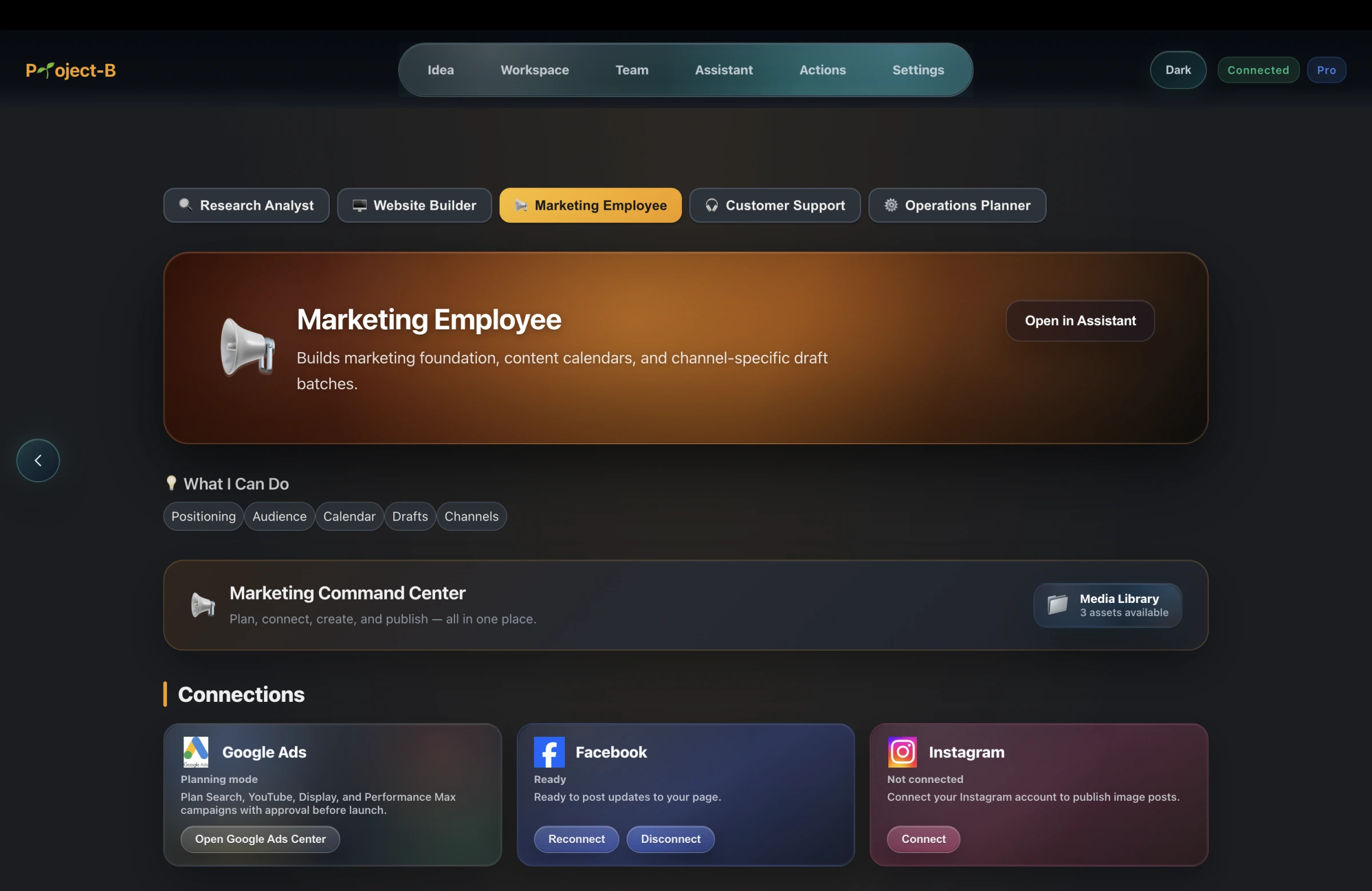
Where Project-B fits
Project-B — Inciver’s Business Creation Platform. Project-B helps define the target customer, research how to reach them, and create business-aware marketing. It is not a sales-engagement platform, prospect database, CRM, or outbound sequencing engine.
Sources reviewed
- HubSpot Sales Hub — official product or pricing source
- Apollo — official product or pricing source
- Pipedrive — official product or pricing source
- Close — official product or pricing source
- lemlist — official product or pricing source
- independent category and search-intent reference
Sources were checked on 2026-09-13. Reconfirm pricing, availability, and local terms at purchase time.