To find your first customers, choose a specific group with a problem you can solve, make a clear offer, and reach people where that problem already appears. Start with one or two channels you can use personally. Track qualified conversations and meaningful next steps, then adjust the audience, offer, or approach based on what you learn.
Early customer acquisition is not the same as building a large following. A useful first result might be a paid pilot, a booked consultation, or a serious request for a quote. The right next step depends on how the customer buys.
Start with a buying situation, not a demographic
“Small businesses” is too broad to guide outreach. “Independent shops adding an online catalog before a seasonal launch” gives you a situation, a task, and a possible reason to act now.
Write down three signals that make someone a plausible prospect: they experience the problem, can influence the purchase, and have a reason to address it. Build a small list you can review individually using relevant public business information, introductions, or opt-in inquiries. Do not collect private contact details or buy a large list simply to create volume.
If you cannot describe a concrete problem yet, return to testing the business idea. Acquisition cannot reliably compensate for an offer nobody needs. Also separate the user from the buyer: a team member may welcome help but have no authority to approve it.
Make the first offer easy to assess
A first offer should answer five questions: who it is for, what they receive, what it costs or how a quote is determined, when it is delivered, and what they need to do next. Reduce uncertainty rather than promising a dramatic result.
For a hypothetical product-photography service, “I help brands grow” is vague. “A fixed-scope photo session for five catalog products, with agreed image formats and a delivery date” is easier to evaluate. State revision limits, customer preparation, and what is excluded before work starts.
When you have no client history, show a clearly labeled sample, a working demo, or your method. Do not imply a sample was commissioned by a customer. A limited paid pilot can reduce commitment without giving away an undefined amount of work. Free trials can also teach you something, but track whether participants resemble likely paying customers.
Choose a route to real people
Pick channels by access and buying behavior, not popularity. Use this as a selection guide, not a requirement to do everything:
- Introductions: Ask an existing contact to introduce you to a specific type of buyer. Give them a short explanation they can forward without pressure.
- Direct outreach: Useful when suitable buyers are identifiable and you can explain why the offer is relevant to their business.
- Communities: Answer real questions and follow promotional rules. Ask before turning a public discussion into a private pitch.
- Local channels and partners: Consider relevant events, neighboring businesses, or complementary providers. Agree on the referral process and customer handoff.
- Search and social: Publish material answering a purchase question or demonstrating your work. These channels may take time; do not assume a new page will immediately attract buyers.
- Paid acquisition: Use a controlled test only when you can afford the loss and understand what a qualified inquiry is worth.
For a resource-constrained start, choose a route you can operate without recurring spend. The broader guide to starting with little or no money explains how that fits with your business model and spending order.
Start a relevant conversation without manufacturing urgency
A good message connects a real observation to a specific offer and asks for a small next step. Here is a hypothetical example for a photographer contacting a suitable business through a permitted business channel:
“Hello [name], I saw that your shop is introducing a new product range. I offer fixed-scope catalog photography for small retailers. If images are still on your launch list, would a sample and a short outline of the session be useful? If not, no problem.”
Use an observation you actually checked. Do not invent a connection, diagnose a problem you cannot see, or send the same “personalized” message indiscriminately. Respect applicable outreach rules, platform restrictions, and requests not to be contacted.
For an interested reply, ask about the goal, timing, scope, and decision process before sending a proposal. Summarize the agreement in plain language. If there is no reply, one relevant follow-up may be reasonable where permitted. Add useful information rather than “just checking in,” and stop when the person declines or asks you to stop.
Run a small experiment with a clear learning goal
Choose a batch small enough to research and respond to well. For example, you might contact a handful of qualified prospects over a week. That is a planning example, not a minimum sample or a promise of sales.
Keep a simple record: prospect fit, channel, message or offer version, response, next action, and outcome. Record money spent and founder hours separately. Decide in advance when to review the batch and what would justify another one.
Count stages rather than only totals: people reached, relevant replies, qualified discussions, offers sent, and accepted offers. A qualified discussion includes a plausible need and buying path; a friendly response alone does not. In longer sales cycles, a meeting with the decision-maker or an agreed evaluation can be meaningful progress before payment.
Find the bottleneck before changing everything
- No relevant replies: Check whether messages are delivered, prospects fit, and the opening explains why they should care.
- Replies but no next step: The offer may be unclear, badly timed, or too demanding for the trust you have earned.
- Conversations but no agreement: Investigate price, alternatives, decision authority, and the cost of switching.
- Sales but poor economics: Count delivery effort, acquisition cost, support, and rework before expanding.
Change one major variable at a time where practical. If you change the audience, price, and message together, it becomes hard to tell what mattered. Small batches give directional learning, not dependable conversion benchmarks.
After delivering successfully, ask for specific feedback and, when appropriate, an introduction to someone with a similar need. Request permission before using a customer's name or comments publicly. Repeat the parts that worked, then organize them into a simple marketing plan.
How Project-B supports the work
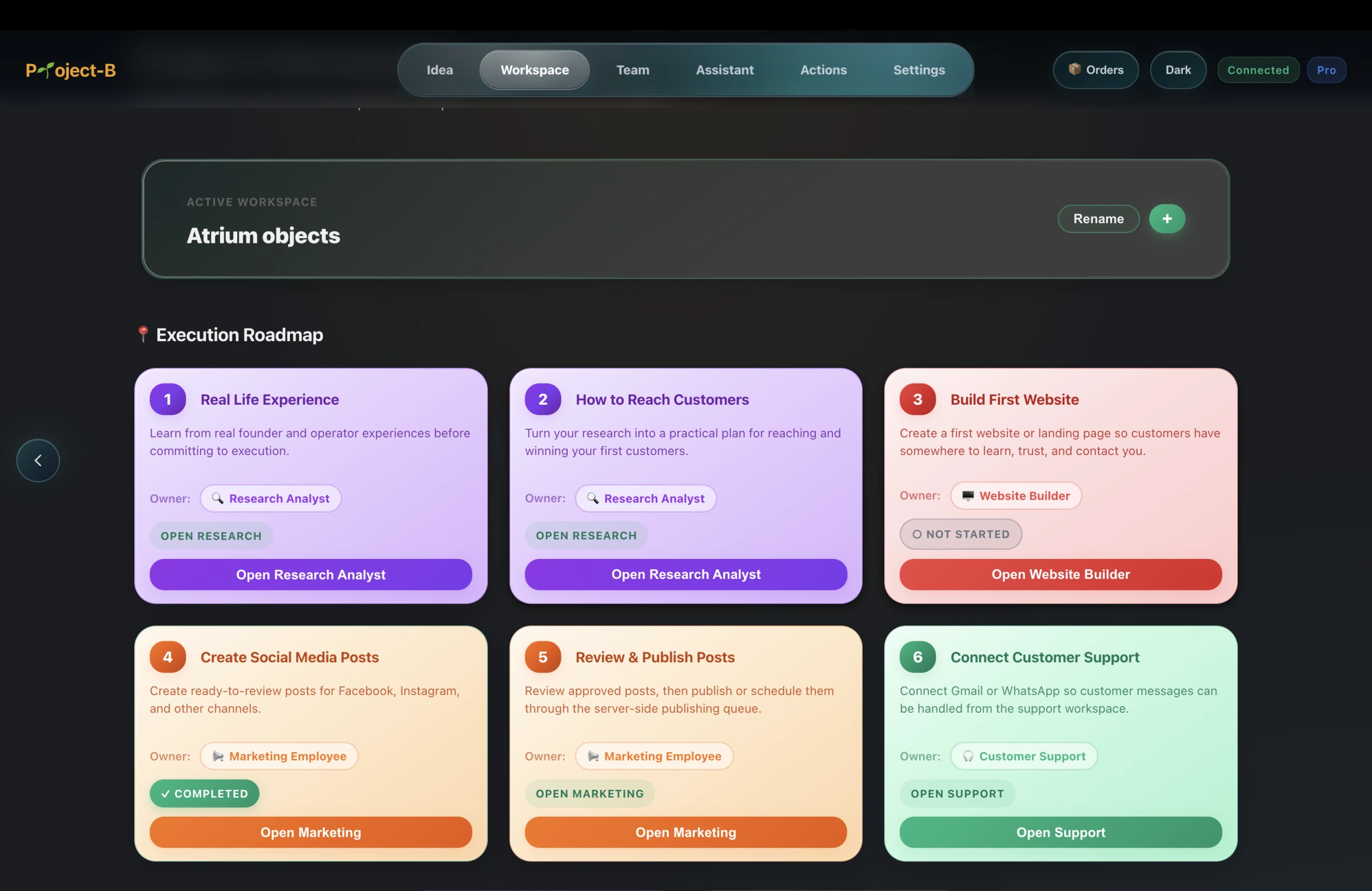
Project-B, Inciver's Business Creation Platform, connects research with business-building tasks. The Research Employee's How to Reach Customers area can help investigate audiences and plausible routes to reach them. The Marketing Employee can help create business-aware content for the offer you are testing. It can also automatically publish approved Facebook and Instagram posts on schedule, even while you’re asleep.
The platform can reduce switching between research and content tools. It does not replace prospect judgment, personal conversations, or a service you can deliver. Keep the first acquisition experiment small enough that you can learn directly from it.
Before increasing exposure, make sure delivery and support are ready. A step-by-step launch plan connects those responsibilities with the first customer commitments.
First-customer questions
Do I need a website before finding customers?
Not always. A clear offer, a relevant sample, and a reliable way to contact you may support an early conversation. A website becomes useful when buyers need to verify details or take an action without waiting for you.
Should I discount to get my first customer?
Only with a reason and a clear scope. A pilot price can reflect a limited deliverable or learning arrangement. An open-ended discount can attract the wrong expectations and hide whether the normal offer makes economic sense.