Choose marketing channels by locating where your target customer discovers, evaluates, and acts on offers like yours. Compare each channel by intent, reach, trust, cost, feedback speed, content demands, and your ability to follow up. Start with one primary acquisition route and one supporting channel, then earn expansion with evidence.
Start with the customer’s path, not a platform list
Use your target-customer definition and identify the trigger that starts a search, the information needed to compare options, the people who influence the choice, and the action that ends the journey. A local emergency service and a considered B2B purchase should not use the same channel logic.
Ask where recent customers looked, what they searched, which communities or people they trusted, and what convinced them to continue. “Our audience uses social media” is not enough. The channel must connect to a buying situation.
Understand the job different channels can do
- Search: captures expressed intent when people already know how to describe the need.
- Direct outreach: reaches a narrow, identifiable group and produces fast qualitative feedback.
- Communities and events: build relevance and trust when participation is genuine.
- Partnerships and referrals: borrow distribution and credibility from aligned relationships.
- Social content: demonstrates ideas or products over time, but demands a repeatable content practice.
- Email: continues a permission-based relationship; it is not an audience until people choose to join.
- Paid media: can buy controlled reach and faster tests when the economics and customer path are ready.
A website is usually a destination and evidence layer, not automatically a source of traffic. A marketplace may combine discovery and transaction but also controls rules, fees, and access to the audience.
Score channel fit before committing
For each plausible channel, rate the evidence for customer presence, buying intent, credibility, cost to test, time to learn, production effort, measurement, and follow-up capacity. Write the uncertainty beside the score. A precise number built on guesses is less useful than an honest “unknown—test this week.”
Use the business model as a constraint. A low-margin item cannot absorb the same acquisition cost as a high-value service. A founder who cannot produce daily video should not make daily video the only route. A regulated offer may have advertising and disclosure rules that vary by market and platform.
Choose a small channel portfolio
Pick one channel that can produce direct conversations or transactions, then one that supports trust or follow-up. Examples include targeted outreach plus a focused website, partner introductions plus email, or high-intent search content plus a clear inquiry path. This creates a learning system rather than several disconnected publishing obligations.
Connect the choice to a simple marketing plan: one commercial objective, one audience, one offer, one message, one primary channel, a budget and time limit, and a measure tied to customer action.
Run a channel test with a decision rule
Define the audience, message, offer, asset, reach target, time or spend limit, and meaningful response before launch. Track the complete path: impressions or sends, relevant visits or replies, qualified conversations, requests, and completed customer actions. Volume without relevance can hide a poor fit.
At the end, decide whether the bottleneck was reach, message, offer, trust, response speed, or delivery. Continue, revise, or stop based on that diagnosis. Do not conclude that an entire channel “doesn’t work” from one weak creative, or keep spending because a vanity metric improved.
Do not confuse a channel with a format
Video, articles, demonstrations, calculators, and customer stories are formats. Search, email, communities, partnerships, marketplaces, and social platforms are routes through which those formats reach people. The same useful demonstration may support a sales conversation, a product page, and an approved social post.
Define a reuse path before increasing production: one customer question can become an answer page, a short post, and a sales note, with the facts reviewed once. This is operational efficiency, not permission to publish identical material everywhere. Adapt the context, action, dimensions, and platform rules.
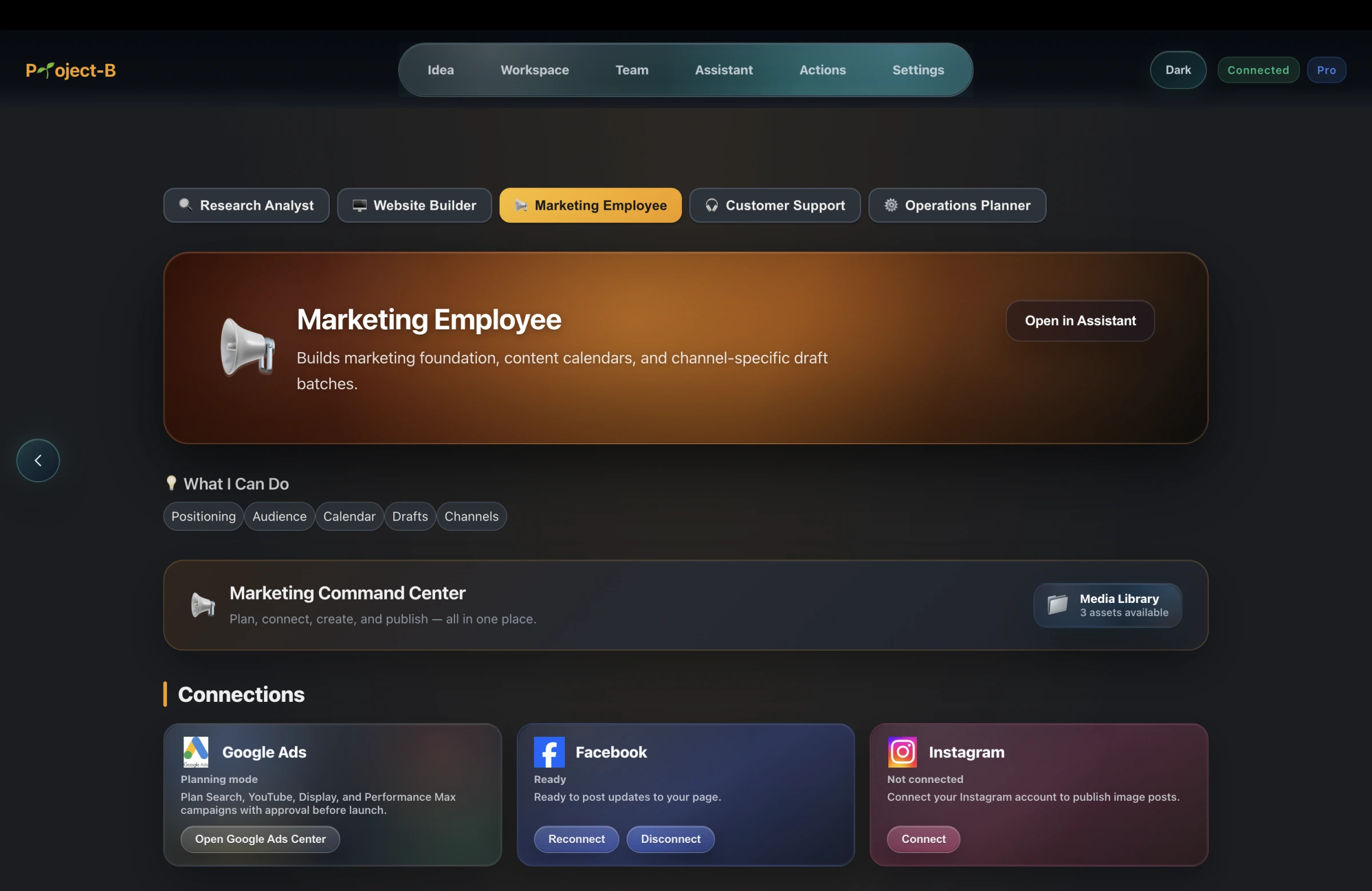
Plan the route, content, and approved publishing together
Project-B by Inciver is a Business Creation Platform whose research includes How to Reach Customers. Its Marketing Employee can use the connected business context to help create marketing content and automatically publish approved Facebook and Instagram posts on schedule, even while you’re asleep.
It does not make every channel suitable or remove the need to approve content, respond to people, check platform rules, and measure commercial outcomes. Use automation after choosing the channel’s job.