To define your target customer, begin with the problem and the situation in which it becomes important. Identify who experiences it most often or severely, what they do today, what triggers them to look for another option, who decides and pays, and where you can realistically reach them. Then test that definition against conversations and behavior.
Start with the problem, not an invented persona
“Adults aged 25–45” rarely tells you what to build or say. Two people with the same age and income may have completely different needs. Start by describing the job the customer is trying to complete, the obstacle, its consequence, and the current workaround.
A bookkeeping service might initially say “small businesses.” A more useful starting point is “owner-operated service businesses that send invoices themselves, lose track of overdue payments, and are not ready for an in-house finance role.” The second description guides the offer, evidence to collect, and route to the customer.
Define the buying situation
Capture five types of context:
- Trigger: what makes the problem urgent now?
- Current behavior: how is the customer coping today?
- Cost of the problem: what time, money, risk, or frustration does it create?
- Decision: who uses, recommends, approves, and pays?
- Reach: where does this customer already search, gather, or ask for help?
For a consumer business, household role, location, routine, and purchase frequency may matter. For B2B, role, business model, team size, workflow, authority, and timing may matter more. Use only details that change a real decision.
Choose a first segment without pretending it is permanent
List two to four plausible groups, then compare problem intensity, frequency, current spending, ease of reaching them, ability to serve them, and fit with your strengths. Choose one segment for the first test. Targeting one group first does not prohibit other customers from buying; it makes learning interpretable.
This is distinct from estimating the whole market. A large market can still be a poor first segment if the customer does not feel the problem, has no reason to change, or cannot be reached economically. If you need the broader evidence, use the business-idea research process before committing.
Write a target-customer statement that guides action
We are initially serving [specific group] when [trigger/situation]. They need to [job/outcome], but currently [constraint/workaround]. They choose based on [decision factors], and we can reach them through [plausible routes].
Add exclusions. State who is not the first customer and why. A clear boundary prevents product requirements, messages, and channels from expanding every time someone says “what about this audience?”
Test the definition with behavior
Recruit people who genuinely match the description and conduct customer interviews focused on recent behavior. Look at queries, discussions, reviews, support questions, purchase patterns, and alternatives. Avoid treating social engagement or compliments as demand.
Revise the segment when evidence shows that the problem, urgency, authority, or reach differs. Keep a short decision log: what changed, what evidence changed it, and what product or marketing decision follows. A target customer is a working choice, not a fictional biography.
Watch for definitions that cannot be disproved
“People who value quality” is not a useful segment because almost anyone can agree with it. “Busy parents” remains broad until the task, moment, location, and decision are clear. A persona filled with hobbies and a fictional name can also distract from missing evidence. Keep a detail only if it changes the product, price, message, channel, delivery, or support choice.
Before launch, ask whether you can find five real people who match the definition, describe the same problem in their own words, identify their current alternatives, and explain a credible way to reach more of them. A “no” is not failure; it identifies the next research task.
Keep the customer definition connected to execution
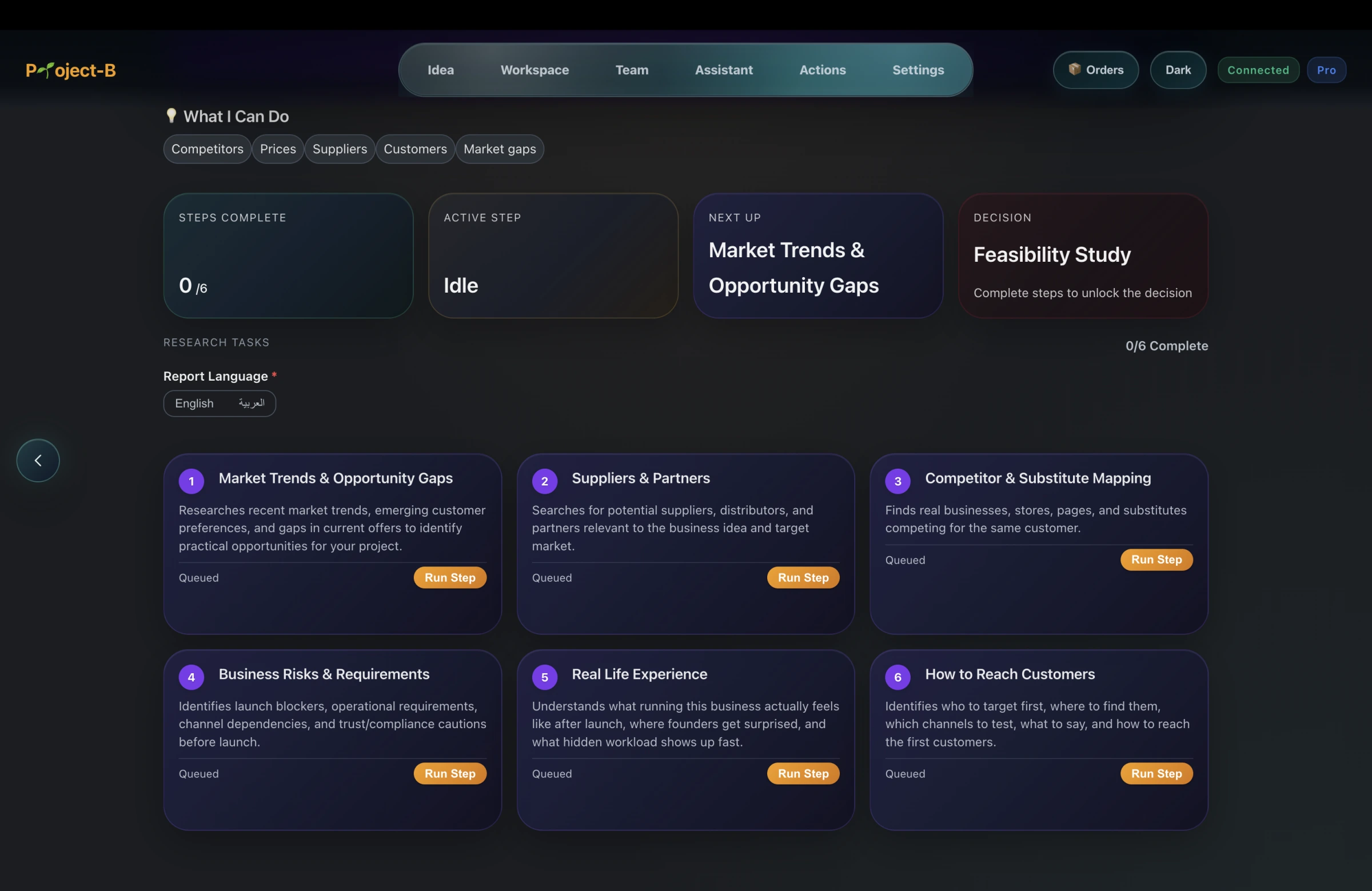
Project-B — Inciver’s Business Creation Platform can help organize Customer Pain & Real Discussion research and How to Reach Customers evidence in the same business workspace. That context can then inform the execution roadmap, website or store, and marketing work rather than becoming an isolated persona document.
Project-B cannot decide who will buy or guarantee demand. The definition improves when you compare its research with direct conversations, small tests, and what customers actually do.