To find reliable suppliers, write a precise requirement, identify several plausible candidates, verify each business, request comparable quotes, order samples, and test communication and delivery. Choose on total value and risk—not unit price alone—and keep a qualified backup for products the business depends on.
Reliability is observable over time. A polished listing or one quick reply is only a first signal. The purpose of supplier research is to reduce preventable surprises before a customer order depends on the relationship.
Define what the business needs before contacting suppliers
Write a short specification covering the product or service, quality standard, variants, initial quantity, expected repeat volume, destination, target delivery window, packaging, labeling, and documents you may require. Separate essentials from preferences.
For a reusable bottle, “good quality and fast shipping” is not testable. Material, capacity, lid performance, packaging, destination, target quantity, and acceptable defect handling give suppliers something concrete to quote. If you have not yet decided what to sell, start with the product-selection framework.
Know which supplier type fits the model
- Manufacturer: makes the product and may offer customization, often with higher minimum orders or longer setup.
- Wholesaler: sells existing products in bulk, often with easier assortment but an added layer in the price.
- Distributor: represents one or more producers in a market and may provide local stock or support.
- Dropshipping supplier: ships individual orders to customers, reducing inventory needs while increasing your dependence on its fulfillment.
The right type depends on volume, control, cash, customization, and delivery expectations. A new business may begin with lower minimums, then revisit direct manufacturing when repeat demand justifies the commitment.
Find candidates through more than one route
Search industry directories and marketplaces, attend relevant trade events, consult trade associations, inspect labels on comparable products where lawful, ask adjacent businesses for introductions, and contact manufacturers directly. Search in the production region’s language where practical.
Keep discovery separate from approval. A directory listing introduces a candidate; it does not certify product quality or commercial reliability. Record the legal business name, website, location, contact, source, product fit, and date checked in a shortlist.
Verify the supplier and ask comparable questions
Confirm that the business identity and contact details are consistent. Ask who manufactures the item, which specifications can be guaranteed, how quality is checked, what happens when stock changes, and whether relevant documentation can be supplied. Verification methods and required documents vary by product and jurisdiction; use official registers or qualified advice where appropriate.
Send the same request to each candidate:
- price tiers, currency, quote validity, and what the price excludes;
- minimum order quantity (MOQ) and sample cost;
- production or dispatch lead time and capacity constraints;
- shipping options, handoff point, tracking, and responsibility for loss;
- payment schedule and accepted business payment method;
- defect, return, refund, and reshipment process;
- communication owner and escalation route.
Do not send unnecessary confidential information during early screening. Avoid payment arrangements that remove reasonable protection, and pause when the beneficiary or business identity changes without a credible explanation.
Order samples and test the real workflow
Evaluate the sample against a written checklist: dimensions, materials, finish, function, packaging, labels, instructions, and consistency across units. For products with safety or regulatory requirements, obtain the evidence your target market requires rather than accepting a generic “certified” statement.
Also score the process. Was the quote complete? Did the sample match the specification? Were promised dates met? Did tracking work? How did the supplier handle a question or defect? When delivery is customer-facing—as in dropshipping—place a test order through the exact route a customer would experience. For apparel-specific specifications, sizing, samples, and labels, continue with the guide to starting a clothing brand on a small budget.
Compare total value, then reduce dependency risk
| Criterion | Evidence to record |
|---|---|
| Quality | Sample results, tolerances, defect response |
| Total cost | Unit, setup, packaging, shipping, duties, payment fees |
| Cash commitment | MOQ, deposit, payment timing, stock exposure |
| Delivery | Production and transit ranges, tracking, delays |
| Terms | Specifications, returns, liability, quote validity |
| Communication | Accuracy, response quality, escalation path |
Weight criteria according to the business. A supplier that is slightly more expensive but reduces defects, inventory exposure, or delivery uncertainty may create better economics. Recalculate the full cost behind your selling price before deciding.
Document the agreed specification and terms. Begin with a manageable order when possible, inspect incoming goods, and track defect rate, on-time delivery, and response quality. Qualify a backup for critical items; splitting or moving orders may have costs, but discovering alternatives during a failure is worse.
Common warning signs: refusal to provide verifiable business details, inconsistent samples, unexplained bank-account changes, copied documents, pressure to skip checks, vague defect terms, or promises that contradict the written quote.
How Project-B supports supplier research
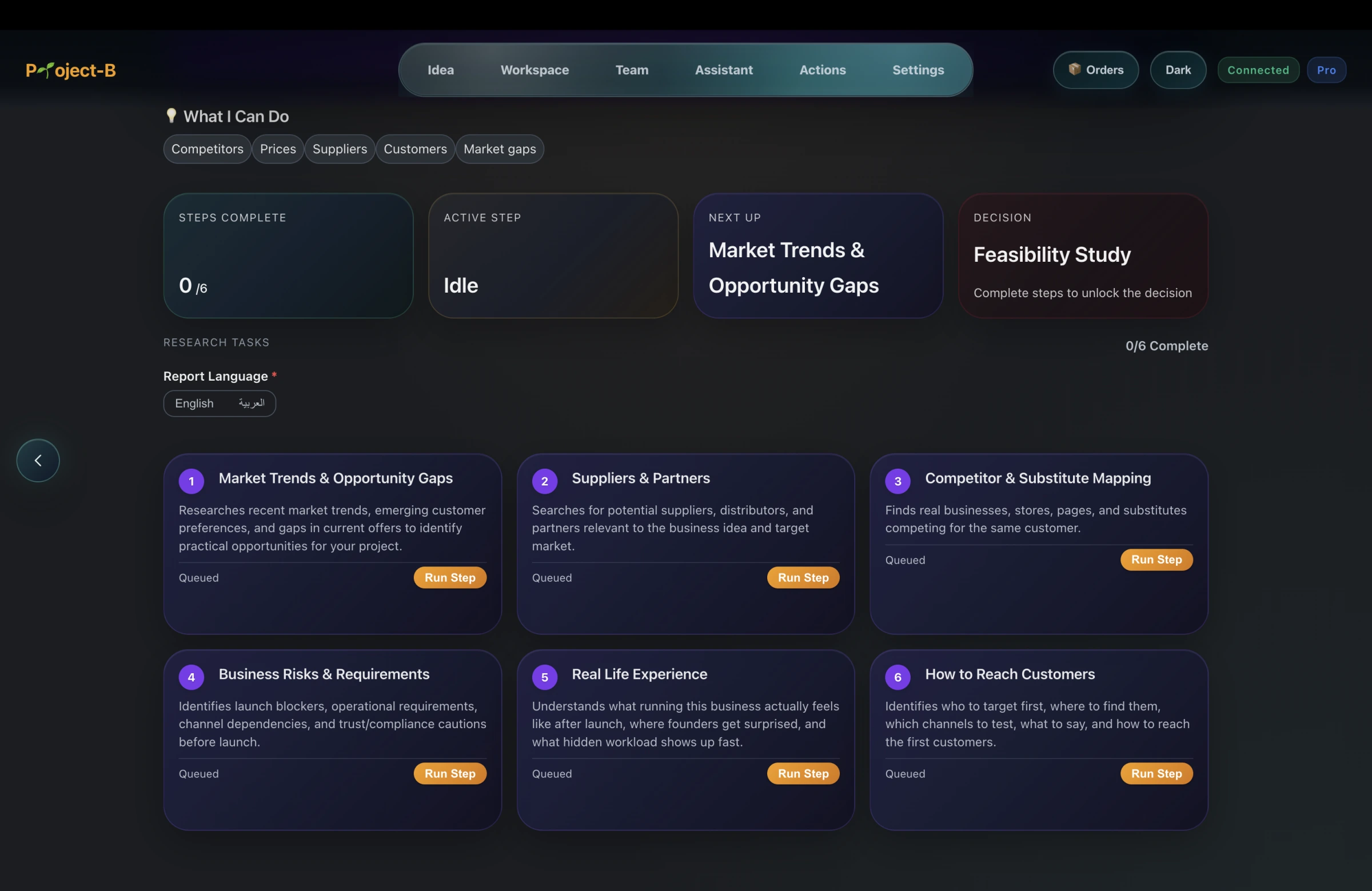
Project-B is Inciver’s Business Creation Platform. Its Research Employee includes Suppliers & Partners alongside customer pain, competitor and substitute mapping, business risks and requirements, real-life experience, and ways to reach customers.
That connected research can help you assemble and compare evidence without treating supplier choice as an isolated search. You still need to verify identities, order samples, confirm current terms, and judge what applies to your market. Project-B does not certify suppliers or guarantee their performance.