To start a dropshipping business, select a specific customer and product direction, confirm demand, compare suppliers, calculate the full cost of delivering an order, build a trustworthy store, and place test orders before accepting real customers. Launch with a small product set and budget, then judge the model by delivered orders, contribution margin, refunds, and customer feedback—not traffic alone.
Dropshipping removes the need to hold every item yourself, but it does not remove responsibility. The customer buys from your store. You remain accountable for accurate claims, communication, returns, and the experience created by a supplier you do not directly control.
Understand how dropshipping actually works
In a dropshipping model, you list products without stocking them locally. When a customer orders, you send the order to a supplier, which ships to the customer. Your revenue is the customer payment; your costs can include the supplier price, shipping, payment fees, marketing, refunds, and operating overhead.
This is not passive income. Product research, merchandising, supplier monitoring, customer support, and marketing are ongoing work. A supplier dispatching the parcel does not guarantee that it arrives quickly, matches the page, or meets the rules that apply in the destination market.
1. Choose a narrow customer and product direction
Start with a buying situation rather than a catalog. “Accessories for people setting up a compact home office” gives you clearer product, content, and customer questions than “trending gadgets.” Define the problem, the intended buyer, why the item suits remote delivery, and what would make your offer different.
Use the product-selection framework to compare demand signals, differentiation, selling price, margin, shipping, returns, supplier availability, and restrictions. Then validate the core assumptions through customer conversations, competitor evidence, and a small test. Social attention can suggest curiosity; it does not establish profitable demand.
2. Map competitors and the customer promise
Compare direct stores, marketplaces, local retailers, and the option of doing nothing. Review total price, delivery promise, product information, returns, trust signals, and recurring customer complaints. Many sellers offering an item can demonstrate demand, but it can also make undifferentiated acquisition expensive.
A useful difference might be a better-defined use case, clearer guidance, a carefully selected bundle, faster verified delivery, or more dependable support. Do not call the product exclusive unless you can substantiate that claim. The existing competitor-analysis guide shows how to attach evidence to the comparison.
3. Find and verify the supplier before building around it
Create requirements for product specification, destinations, dispatch time, tracking, packaging, returns, defect handling, stock updates, and communication. Ask several candidates the same questions and record the answers. Our guide to finding reliable suppliers includes a practical comparison process.
Order samples to the markets you intend to serve. Examine the product, packaging, actual transit time, tracking messages, and any fees encountered. Photograph what arrives and compare it with the listing. Run another test later when consistency matters; one good sample is evidence of one shipment, not permanent reliability.
Warning signs: unverifiable business details, copied or inconsistent product media, pressure to pay through an inappropriate channel, vague return responsibility, and promises that are materially better than every comparable supplier without evidence.
4. Calculate landed cost and margin per order
Do not subtract only the product price from the selling price. Build a per-order model that includes the supplier item cost, shipping, payment and platform fees, packaging or service charges, expected refunds and reshipments, customer acquisition, and taxes or duties where they apply.
| Illustrative order | Amount |
|---|---|
| Selling price | $50 |
| Product and supplier shipping | -$25 |
| Payment and platform costs | -$3 |
| Expected returns/support allowance | -$4 |
| Acquisition cost | -$12 |
| Contribution before overhead | $6 |
This example is not a target margin. Change each input for your business, market, and payment route. Use the pricing-for-profit guide to include costs that beginner calculations often miss. Verify tax, customs, consumer, and product requirements for every jurisdiction involved; rules are not universal.
5. Build a small store that sets accurate expectations
Launch with a limited range you understand. Each product page should use accurate media, explain the product and important limitations, show the full price, state realistic delivery expectations, and make the returns and contact paths easy to find. Avoid fabricated scarcity, reviews, or results.
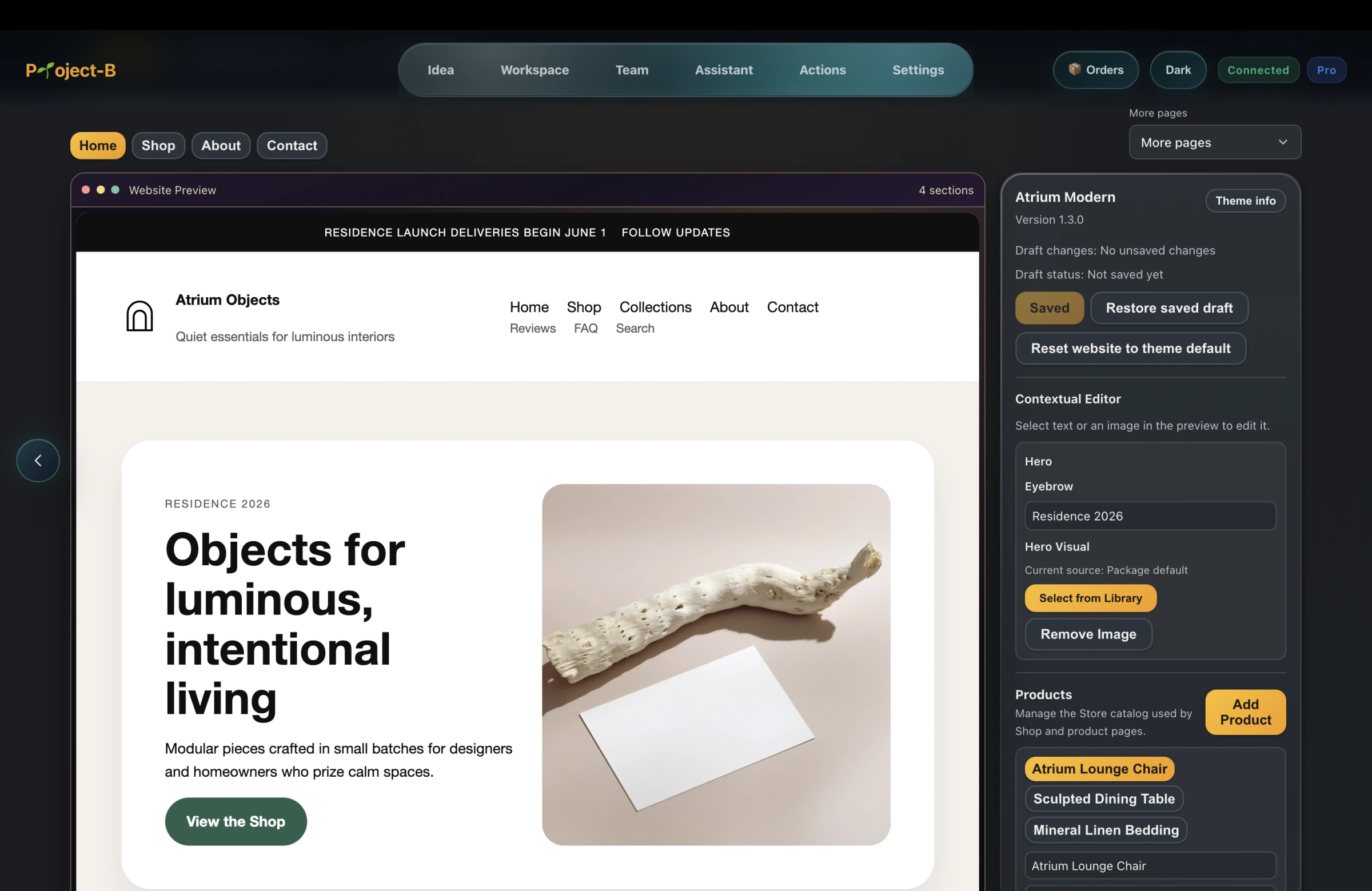
Test the complete path on mobile and desktop: product choice, cart, checkout or inquiry, confirmation, supplier handoff, tracking, support, and refund handling. Project-B can help build a store and publish it on an Inciver-hosted address, but it does not automatically import supplier catalogs or fulfill dropshipping orders.
6. Run a controlled first launch and measure delivery
Choose one reachable audience, one or two acquisition routes, a spending limit you can afford to lose, and a maximum number of orders you can support personally. A focused marketing plan is more useful than opening every channel at once.
Measure product-page engagement and checkout starts, but prioritize completed orders, actual acquisition cost, delivery time, support contacts, refunds, and contribution after variable costs. Contact early customers for specific feedback. If people click but do not buy, investigate the offer and trust. If they buy but deliveries fail, stop acquisition and fix operations.
Scale only after the full customer promise works repeatedly. Growth amplifies supplier and support problems as quickly as it amplifies revenue.
Where Project-B fits in a dropshipping workflow
Project-B is Inciver’s Business Creation Platform. Initial Feasibility and the Research Employee can help investigate customer pain, suppliers and partners, competitors and substitutes, business risks, real operator experiences, and ways to reach customers. An Execution Roadmap can organize what must happen before launch, while the Website / Store Builder supports the customer-facing store.
For marketing, Project-B can create business-aware content and automatically publish approved Facebook and Instagram posts on schedule, even while you’re asleep. You still decide what is accurate, approve what goes out, and manage supplier orders, fulfillment, customer terms, and support. Project-B does not guarantee demand, margin, or sales.
Before accepting the first order
- Can you explain the target customer and use case in one sentence?
- Have you tested the actual product and delivery route?
- Does the selling price cover realistic variable costs and failures?
- Are delivery, returns, and support expectations clear?
- Does the full order and confirmation path work?
- Can you pause marketing if stock, delivery, or support fails?
- Have you checked the requirements that apply to the product and markets involved?